Most of us already know that gratitude is “good for us”. We have seen the pretty journals and the quotes about counting our blessings. And yet, when life gets busy or heavy, gratitude is often the first habit to slip. We forget, we feel silly, or we sit in front of a blank page thinking, I really don’t feel grateful today.
The good news is that a gratitude practice doesn’t have to be perfect, long or even daily to make a difference. It simply has to be real and repeatable. In this guide, I’ll share why gratitude works, the most common reasons it doesn’t stick, and a simple, flexible routine you can keep up even on the hard days.
Why gratitude is worth your time
Gratitude is more than politeness. It is a way of training your attention. Our brains are wired with a natural “negativity bias”: we notice threats, problems and unfinished tasks more easily than the quiet good things around us. That bias kept our ancestors safe, but in modern life it can leave us feeling like nothing is ever quite enough.
Practising gratitude gently balances the scales. In a well-known study, psychologists Robert Emmons and Michael McCullough asked people to write down, once a week, a few things they were grateful for. Compared with groups who wrote about hassles or neutral events, the gratitude group reported feeling more positive about their lives and more optimistic about the week ahead. Other research, including Martin Seligman’s “Three Good Things” exercise, has found similar boosts in well-being from simply noting what went well and why.
Gratitude won’t erase real problems, and it isn’t a cure for depression or anxiety. But as a daily habit, it can help you:
- notice more moments of everyday joy,
- feel more connected to the people around you,
- put stressful days into a kinder perspective,
- and end the day on a calmer note, which many people find helps them unwind before sleep.
Why most gratitude habits fade
If you have started a gratitude journal before and quietly abandoned it, you are in very good company. These are the most common reasons it happens:
1. It becomes a chore
Writing five things every single night can start to feel like homework. When gratitude turns into an obligation, it loses its warmth.
2. The list gets repetitive
“My family, my home, my health” are lovely things to appreciate, but writing the same three words every day becomes automatic. Your mind stops actually feeling them.
3. It feels forced on difficult days
When you are grieving, exhausted or simply having a rotten week, being told to “look on the bright side” can feel dismissive. Gratitude should make room for hard feelings, not cover them up.
4. There is no clear trigger
Habits stick when they are attached to something you already do. “I’ll be grateful at some point today” is easy to forget.
A gratitude practice that actually sticks
Here is the simple routine I recommend. It takes three to five minutes and is designed to stay fresh.
Step 1: Anchor it to an existing habit
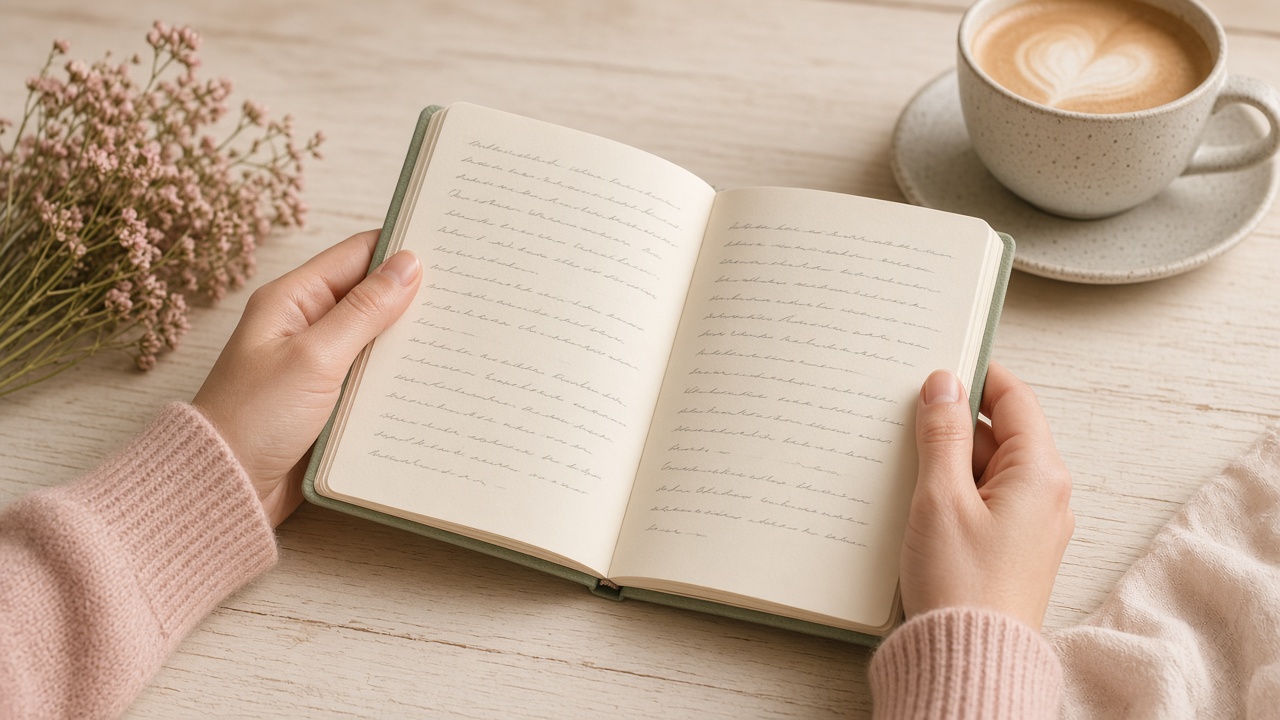
Pick a moment that already happens every day: your morning coffee, brushing your teeth at night, the first minute after you get into bed. Keep a small notebook (or a notes app) right where that moment happens. The anchor does the remembering for you.
Step 2: Write three things, and make them specific
Instead of “my sister”, try “the voice note my sister sent me this afternoon that made me laugh in the supermarket”. Specific moments are easier to relive, and reliving them is where the good feeling comes from. A helpful rule: if you could have written the same sentence yesterday, add one more detail.
Step 3: Add the “why”
After each item, write one short line about why it mattered. “The sunshine on my walk — it reminded me spring is coming.” This tiny addition turns a list into reflection, and it’s the part of Seligman’s exercise many people find most powerful.
Step 4: Don’t aim for every day
Here is a surprising detail: some research suggests that writing a few times a week can feel just as meaningful as writing daily, because it keeps the practice from becoming rote. If daily journaling feels heavy, choose three evenings a week. Consistency matters more than frequency.
Step 5: Read back once a month
At the end of each month, flip back through your pages. You will be amazed by how many small kindnesses and lovely moments you would have otherwise forgotten. This is a wonderful thing to do on a gloomy day.
Gratitude doesn’t ask you to pretend everything is fine. It simply asks you to notice that not everything is wrong.
Gratitude on hard days
Some days, the last thing you want is to list blessings. On those days, try one of these softer approaches instead:
- Go tiny. “A warm shower.” “My bed.” “This cup of tea.” Small comforts count.
- Be grateful for yourself. “I got through today.” “I asked for help.” “I was kind even though I was tired.”
- Hold both. Write one honest sentence about what is hard, followed by one small thing that helped. Gratitude and sadness can sit side by side.
- Skip it, kindly. If it truly feels wrong, close the notebook. A gentle practice is one you can return to without guilt.
Fresh gratitude prompts for when your mind goes blank
20 prompts to keep your practice alive
- What made me smile today, even for a second?
- Who made my life a little easier this week?
- What is something in my home I use every day and love?
- What is a skill I have that I once had to learn?
- What did I see, hear or smell today that was beautiful?
- What is a challenge that taught me something valuable?
- What is a small luxury I often take for granted?
- Which friend always makes me feel understood?
- What is something my body did for me today?
- What is a memory that still makes me warm inside?
- What went better than I expected recently?
- What is a book, song or film that changed something in me?
- What is something about where I live that I appreciate?
- Who taught me something important, and what was it?
- What am I looking forward to this month?
- What is a mistake I’m glad I made?
- What is a compliment I received that I still remember?
- What part of my daily routine brings me comfort?
- What is something in nature I noticed this week?
- What is one thing about myself I’m learning to love?
Take gratitude beyond the journal
Writing is a lovely start, but gratitude grows even more when it’s shared. A few ideas:
- Send a thank-you message. Once a week, text someone a specific note of appreciation. It takes thirty seconds and often makes both of your days.
- Try a gratitude letter. Write a longer letter to someone who shaped your life and, if it feels right, read it to them. In positive psychology research, this “gratitude visit” has been linked to a noticeable lift in happiness that can last for weeks.
- Start a family ritual. At dinner, everyone shares one “rose” (a good moment) and one “bud” (something they’re looking forward to).
- Create a gratitude jar. Drop a note in a jar whenever something good happens, then read them all on New Year’s Eve or your birthday.
A simple 7-day starter plan
| Day | Practice |
|---|---|
| 1 | Choose your anchor moment and place a notebook there. |
| 2 | Write three specific good things and why they mattered. |
| 3 | Send one thank-you text to someone you appreciate. |
| 4 | Write three things, using a prompt from the list above. |
| 5 | Notice one beautiful thing outdoors and pause for 30 seconds. |
| 6 | Write three things you’re grateful for about yourself. |
| 7 | Read back your week and choose your favourite moment. |
The heart of it
A gratitude practice isn’t about pretending life is perfect or forcing yourself to feel cheerful. It is a small daily act of noticing — of letting the good things land, instead of letting them slip past unnoticed. Start tiny, stay specific, and be gentle with yourself when you miss a day. Over time, you may find that you don’t just write about good moments more often; you start seeing them more often, too.
What is one thing you are grateful for right now? Hold onto it for a moment. That’s where it all begins.